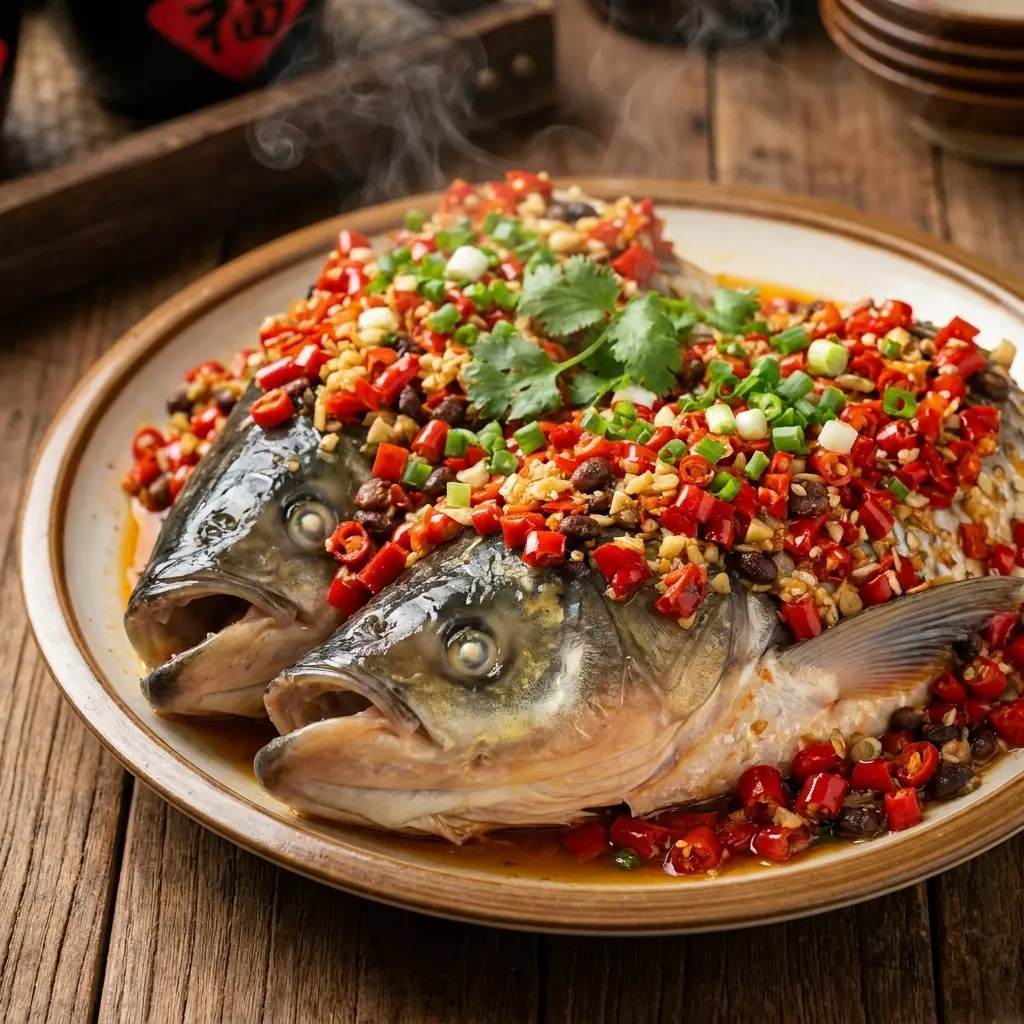
Fish Head with Chopped Chilies: The Fiery "Face" of Hunan
A visual impact of red and green, a feast of fresh, spicy, and smooth flavors. Fish Head with Chopped Chilies is the undisputed king of the table in Xiang cuisine.
Contact Me
Want a clearer trip plan from a real local perspective?
Reach out when you want local, honest, and practical help choosing cities, fixing pacing, checking transport, or avoiding common first-time mistakes.
For privacy, contact details stay behind the buttons and are never shown as public text on the site.
Visual Shock: The "Beast" Under Red Chilies
If Xiang cuisine had a business card, it would be this dish. When the server brings out a porcelain plate larger than your face, the visual impact is incredible! A massive bighead carp head is split open and laid at the bottom, covered in a thick layer of bright red chopped chilies, dotted with emerald green scallions. This sharp contrast between red and white is like a fire performance for your eyes. Before you even move your chopsticks, the steam—a mix of fresh fish, sour-spicy chilies, and intense garlic—hits your nose. This isn't just a dish; it's a statement. At a Hunanese table, this dish usually means an important gathering. That splash of red represents a flourishing life and the passionate, bold character of Hunanese people. As a blogger, I'm obsessed with this high-impact color combination. It perfectly interprets our character: no subtlety, no hiding—all the spice and freshness are displayed unreservedly. That layer of red chilies is like dancing flames, igniting your appetite. This visual feast is the best prelude to a taste journey. It tells you: get ready for a fiery baptism. This aura is something no other cuisine can imitate. It's our 'face' and our pride. Sitting at the table, watching this steaming fish head, you feel the vastness of the Dongting Lake and the heat of the Hunan soil. This is a totem of a people.
Waltz of Fresh and Spicy: Depth on the Tongue
Many people think this dish is just 'spicy,' but its true charm is the 'fresh-spicy' layering. The fish head must be from a large bighead carp for the meat to be thick and succulent. After high-heat steaming, the meat remains primitive, sweet, and silky, every fiber full of moisture. And the chopped chilies are the soul—not just dry heat, but a fermented 'Duo Jiao' with a hint of sourness, saltiness, and rich fruitiness. When the sweetness of the fish meets the sour-spicy chilies, a magical chemical reaction happens in the steamer. The fish brain is as silky as jelly, and the cheek meat (we call it 'monk's meat') is the most precious and firm part. Gently push aside the chilies, pick out a piece of snow-white fish meat, dip it in the bright red sauce at the bottom, and put it in your mouth. At that moment, freshness, aroma, spice, and sourness dance a passionate waltz on your tongue. This spice is the kind that makes your forehead sweat but keeps you coming back for more. I strongly suggest you don't miss the meat around the fish eyes; it's incredibly tender and full of collagen. This flavor is alive; it jumps on your tongue, stimulating every taste cell. This respect for the original taste of ingredients and the pursuit of seasoning is the secret of Xiang cuisine's longevity. Every bite is a deep confession to nature. This flavor has the magic to make you drool when you think of it late at night. It's the perfect combination of fire and tenderness.
The Secret Ultimate Move: The Salvation of Noodles
Listen up, as an old Hunan local, I'm going to teach you a secret you cannot miss: Fish Head Noodles. Many people think they're done after the fish meat is gone—that's a tragedy! The most essence-filled part is the sauce at the bottom, which has gathered fish oil, fish juice, the essence of chopped chilies, and garlic. At this point, you MUST call the server for a portion of 'Qing Shui Mian' (plain noodles). Pour the noodles into the plate and let every strand soak up that red oil. After mixing, the noodles become translucent, coated in the savory umami of the chilies. This bite of noodles is even more satisfying than the fish itself! We call this 'Lao Mian' (tossed noodles), the climax of the meal. If you haven't tried this, you've only eaten half the dish. I love this ultimate collision of carbohydrates and spicy sauce. You'll find the noodles are no longer just a side dish; they are the carrier of all the essence. This way of eating shows the practical spirit of Hunanese people—'don't waste a single drop.' Every strand of noodle has soaked up the freshness of the fish and the heat of the chilies, reaching a peak of satisfaction. Don't be afraid of the spice; this joy of eating big mouthfuls of noodles is the perfect curtain call of Xiang cuisine. It's a ritual of sharing and joy. When a table of people finishes the sauce completely, that collective satisfaction is the most moving moment of the trip. This is the authentic way; this is the highest tribute to this famous dish.
The Art of Duo Jiao: The Power of Fermentation
The success of this dish lies entirely in that jar of chopped chilies. Authentic Duo Jiao isn't used fresh; you must chop fresh red chilies, mix them with salt, ginger, garlic, and a bit of white spirit, then seal them in a clay jar to ferment for at least a month. This process gives the chilies a 'soul.' It transforms raw heat into a mellow sour-spicy flavor that effectively removes the fishiness and greatly enhances the meat's freshness. In Hunan, almost every household has a few pickling jars on their balcony filled with secret homemade Duo Jiao. This smell is the smell of mothers, the smell of home. So, when you taste this dish, you're actually tasting the patience and the art of fermentation of the Hunanese people. I suggest you look at the texture of the chilies. Good Duo Jiao should be dark red and shiny, with a natural sour aroma. This folk wisdom is simple but powerful. It proves that the most delicious things often need nature's participation and time's tempering. When you eat this fish, you feel more than just heat; you feel the nostalgia settled in the clay jar. This flavor is stubborn; it won't change for anyone. That's our character: we can stand loneliness and explode with passion. Every jar is a family story, a bond to the land. This persistence makes Fish Head with Chopped Chilies more than a dish; it's a cultural carrier.
Plan With A Local
Need help turning all this research into a real itinerary?
Tell me your dates, budget, pace, or must-see places. I can help you narrow routes, avoid weak choices, and build a more confident plan.
For privacy, contact details stay behind the buttons and are never shown as public text on the site.
Practical Information
- Heat WarningHigh heat! if you can't handle too much spice, try "Double Color Fish Head" (half red chilies, half yellow "Gong" chilies) for a richer, slightly milder flavor.
- Best Way to EatEat the fish eyes first, then the cheek meat, and finally the lips. The lips are full of collagen and incredibly smooth.
- Must-Have SideYou MUST order "Qing Shui Mian" (plain noodles) to toss in the sauce. Trust me, you'll thank me later.
- Where to GoXu Ye is a popular modern choice; for traditional flavors, try Yu Lou Dong or A Du Da Bian Lu.
- Contact Me
Need help with this part of the trip? Use the private WhatsApp or Email buttons on this page for a personal reply.
Need local help with this page?
Ask for route advice, timing suggestions, or a quick sanity check before you book.
For privacy, contact details stay behind the buttons and are never shown as public text on the site.