Fenghuang Ancient Town: A Local's Honest Review
Discover the beauty of Fenghuang. I'll show you how to avoid the noisy bars and truly experience the magical Miao culture and tranquility.
Contact Me
Want a clearer trip plan from a real local perspective?
Reach out when you want local, honest, and practical help choosing cities, fixing pacing, checking transport, or avoiding common first-time mistakes.
For privacy, contact details stay behind the buttons and are never shown as public text on the site.
The Good, The Bad, and The Stunning
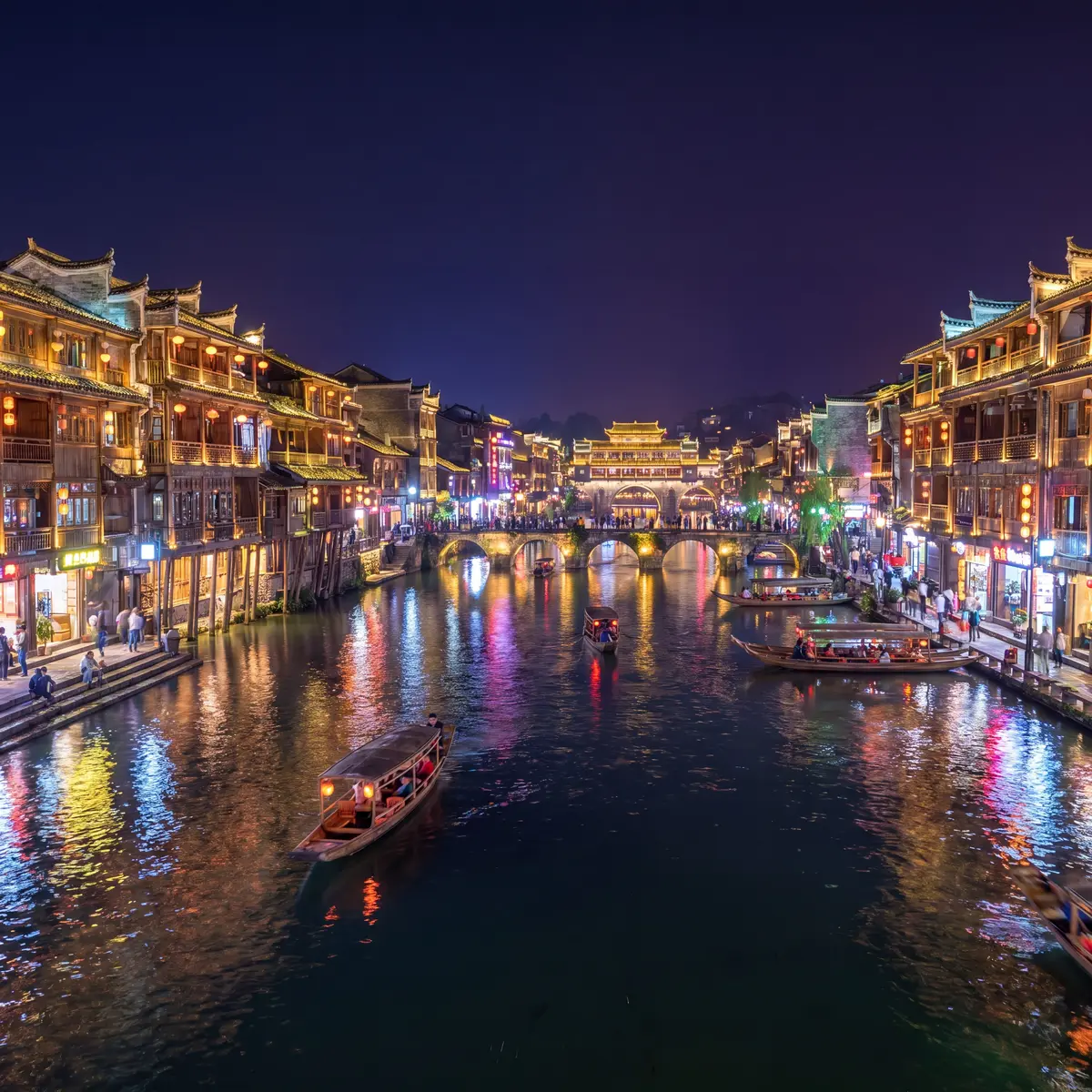
Let's be honest: Fenghuang is one of the most beautiful places in China, but it's also become very commercial. Those Diaojiaolou (stilt houses) hanging over the emerald Tuojiang River look like they were plucked from a 19th-century ink painting. But at night, the riverbank can turn into a party scene filled with neon lights, noisy bars, and cheap souvenirs. Does this mean you should skip it? Absolutely not. It just means you need to know how to find the "real" Fenghuang. To me, this ancient town still carries deep nostalgia, representing the unique culture of the Miao and Tujia people in Xiangxi. It's a place of contrasts, where the ancient and modern collide fiercely along the river. You just need to step through the neon to see the city's pulse. The light and shadow reflected on the river at dawn, the smell of wood fire in the morning, and the old, thick city walls—these are the charms that make Fenghuang timeless. As a blogger, I suggest you view Fenghuang as a "living museum." Even on the most commercial streets, if you look closely, you can still see grandmas embroidering on doorsteps and hear the rhythmic pounding of wooden hammers from the back alleys. This resilience of life is something commercialization can't take away. Don't be blinded by the surface noise; Fenghuang's beauty needs to be "searched for" in the alleys without lights and in the old restaurants that haven't changed their menus for decades. There, you'll find that gentle yet tough Xiangxi soul that has flowed for a hundred years in Shen Congwen's writings.
Secrets to Finding the Magic
Fenghuang's true magic happens in the early morning, before the day-trippers arrive. I always set my alarm for 6 AM. When the morning mist hasn't cleared from the river, the only sound is the rhythmic slapping of local women washing clothes on the stone steps... that's the Fenghuang I want you to see. It's a pure, quiet beauty that makes the whole trip worthwhile. I also recommend staying away from the main riverside roads and diving into the winding, narrow back alleys. You'll find small silver workshops, old men playing chess, and the omnipresent scent of ginger candy. Speaking of ginger candy—that was our childhood snack. Sweet with a spicy kick, supposedly good for the stomach. Buy a small bag and wander along the ancient city walls. It's the taste of a Xiangxi childhood and the perfect companion for a morning walk through history. At this time, you'll see the town slowly waking up. Farmers with carrying poles and vendors with carts appear and disappear in the mist, creating a perfect film-like scene. My favorite moment is sitting at a breakfast stall near Hongqiao, having a steaming bowl of rice noodles. Watching the sun slowly push aside the mist and light up those dark brown stilt houses. This sense of ritual makes you feel like time has slowed down. In Fenghuang, time shouldn't be used for rushing; it should be used for "idling." Find a window overlooking the river, watch the water flow, the boats pass, and the clouds roll. This extreme relaxation is the best healing Fenghuang gives to travelers.
Miao Silver Culture: Beauty of Heritage
Fenghuang is the center of Miao culture. You'll see many local women wearing incredibly complex silver headpieces and necklaces. This isn't just for show; silver jewelry is a vital part of Miao culture, representing wealth, protection, and identity. If you want to buy silver, don't go to those so-called "museum" shops on the main street. Instead, find the old craftsmen in the back alleys who truly hand-make silver pieces. Ask them about the meaning behind the patterns—those dragons, phoenixes, and flowers all tell the long story of this ethnic group's survival in the deep mountains. This isn't just jewelry; it's a visual language of survival and beauty. Buying a piece from a local craftsman is a way to support this culture and bring a piece of Fenghuang's soul home. This connection spans centuries. As a blogger, I'm obsessed with the warm texture of silver under light and shadow. It's not the flash of an industrial line, but a weightiness after being tempered by time. You'll find that every piece of handmade silver has tiny imperfections—marks of the craftsman's temperature and strength. When you wear such a piece, you feel that toughness and tenderness from the Xiangxi mountains. It's not just a decoration; it's an expression of attitude: respecting tradition, honoring craftsmanship. In Fenghuang, this insistence on "slow craft" is one of the most moving backgrounds of the town. Don't rush to bargain; listen to those ancient legends about silver first, and you'll find you've bought a piece of living history.
Nightlife: Embrace It or Escape It
At night, Fenghuang transforms. Both sides of the Tuojiang River are lit by thousands of golden lights—the view is indeed spectacular. However, it's also very noisy. If you like this energy, have a drink at a riverside bar and enjoy the night view; it's a very modern old town experience. If you want peace, find a teahouse in the new district or stay at a hotel away from the bar street. I personally love walking across the "stepping stones" (Tiao Yan) on the river at night—the lights reflecting in the water look like a dream. Just be careful; the stones can be slippery, and the water is deeper than it looks! My advice: spend an hour admiring the lights, then hide in a quiet courtyard guesthouse for a good sleep. The contrast between the brilliant neon riverside and the silent, deep backstreets is one of Fenghuang's most interesting features. This is a city with two faces; you should see both. Try going to those small teahouses without singers, listening to the sound of locals playing cards, or having a late-night snack. Fenghuang's late-night food stalls are full of vitality. By the red charcoal fire, order some cured meat skewers, have a bowl of sweet wine, and watch the riverside lights gradually fade. This process of returning from prosperity to simplicity lets you feel the town's truest breath. Don't be carried away by surface impetuousness; Fenghuang's nights can also be very soulful. The key is which angle you choose to observe it from. To me, the best night is sitting on the wooden balcony of the guesthouse, listening to the river lapping against the shore until the moon rises directly above the stilt houses.
Xiangxi's Living Museum
Fenghuang isn't just about buildings; it's about people. This is the hometown of the great writer Shen Congwen, whose Xiangxi was filled with simple yet raw vitality. Even now, you can see Miao women in traditional embroidered clothes and heavy silver jewelry going about their daily lives. It reminds us that Xiangxi's pace has always been different from the rest of the province. It's tougher, more traditional, and closely linked to the mountains and rivers. When you walk across the stepping stones on the river, slow down. Look at the water, listen to the river, and imagine what this place looked like a hundred years ago. At its core, it hasn't actually changed much. This is a living link to the past, and walking through it is a privilege. As a local blogger, I strongly suggest visiting Shen Congwen's Former Residence. In that simple small house, you can feel a near-fanatical love for his hometown. It's this love that gave Fenghuang immortality in words. You can also visit the Wanming Tower and see those ancient flagstone paths. Every stone is polished bright, recording the passage of countless people. In Fenghuang, history isn't in books; it's under your feet, in the air, and in every conversation with the locals. Don't just be an observer; try to feel that thousand-year-old philosophy of life: no matter how the outside world changes, hold onto that inner peace and passion. This is the ultimate enlightenment Xiangxi gives us.
Keep Planning From Here
A few next reads that fit this page and help you shape the trip more clearly.
7-Day Hunan Highlights
If you have a full week, this is your dream itinerary. Covering Changsha, Zhangjiajie, Furong Town, and Fenghuang—it's the ultimate journey to the soul of Hunan.
Read nextFurong Town Guide
Explore Furong Town (formerly Wangcun), a magical place where stilt houses sit atop a massive waterfall. A hidden Xiangxi gem in locals' hearts.
Read nextHunan Cultural Depth Trip
To understand Hunan, you have to understand our history. This is the cradle of scholars and the spark of revolution. From thousand-year academies to Han Dynasty treasures, I’ll take you deep into the 'Xiang-Chu' culture and the spirit that never goes out.
Read nextPlan With A Local
Need help turning all this research into a real itinerary?
Tell me your dates, budget, pace, or must-see places. I can help you narrow routes, avoid weak choices, and build a more confident plan.
For privacy, contact details stay behind the buttons and are never shown as public text on the site.
Practical Information
- Best SeasonSpring (March-May) or Autumn (September-November). Summer is so crowded it's hard to even walk.
- AccommodationFor the view, book a riverside room, but if you want to sleep, ask if the room faces away from the bar street!
- Must TryLocal Blood Duck (Xue Ya) and Ginger Candy. These are the soul flavors of Fenghuang.
- Contact Me
Need help with this part of the trip? Use the private WhatsApp or Email buttons on this page for a personal reply.
Need local help with this page?
Ask for route advice, timing suggestions, or a quick sanity check before you book.
For privacy, contact details stay behind the buttons and are never shown as public text on the site.