The Soul of Hunan: 3,000 Years of 'Stubborn' History
To understand Hunan, you have to understand our history. This is the cradle of scholars and the spark of revolution. From thousand-year academies to Han Dynasty treasures, I’ll take you deep into the 'Xiang-Chu' culture and the spirit that never goes out.
Contact Me
Want a clearer trip plan from a real local perspective?
Reach out when you want local, honest, and practical help choosing cities, fixing pacing, checking transport, or avoiding common first-time mistakes.
For privacy, contact details stay behind the buttons and are never shown as public text on the site.
The Spirit: 'Ba De Man' & 'Nai De Fan'
There’s a famous saying in China: 'Only the Chu region has talent, and here it flourishes most.' Walking through Hunan, you're not just looking at scenery; you're touching a hard-core, resilient spirit. We call ourselves 'Mules' because our character is 'Ba De Man' (daring to fight/work hard) and 'Nai De Fan' (having endless patience). The source of this? The Yuelu Academy at the foot of Mount Yuelu. Founded in 976 AD, it’s one of the oldest universities in the world. Walking through those ancient, solemn gates, you see the names that changed China’s destiny: Zeng Guofan, Zuo Zongtang, Mao Zedong... They debated here, trying to find a path for the nation. To me, it’s not just a tourist site; it’s a spiritual coordinate, the intellectual heart of Hunan. In those quiet courtyards, you can almost hear the echoes of thousand-year-old debates. We value books, but we value using those books to change reality even more. We don't believe in fate; we believe in grit. This blend of scholarly grace and raw blood is what makes Hunan fascinating. Sitting on a stone bench there, with the breeze from the mountain, you’ll understand why this land produced so many history-makers. It’s in the bones.
Mawangdui: The 2,000-Year-Old Miracle
If you love history, the Mawangdui Han Dynasty exhibition at the Provincial Museum will shake your soul. The accidental discovery in 1972 changed our understanding of ancient civilization. Standing in front of Lady Dai, whose body is so well-preserved after 2,000 years that her skin still has elasticity, is a shock that words can't describe. But the miracle goes beyond her. You’ll see silk robes so thin they could fit in a matchbox, showing incredible weaving technology from 150 BC. The lacquerware and ancient maps are so vibrant they look like they were made yesterday. As a local, I’m always humbled by the extreme aesthetic and scientific spirit of our ancestors. This isn't just an archeology exhibit; it’s a conversation with our roots. It tells us that Hunan was a land of high civilization, not some remote wilderness. You’ll see the sophisticated life of ancient Changsha people and their unique view of the universe. It’s a must-see that requires booking days in advance because everyone wants to see this miracle.
The Red Heart: Shaoshan & National Memory
Hunan is the cradle of modern Chinese revolution, and Shaoshan is the most emotionally heavy coordinate on this red map. As the birthplace of Chairman Mao Zedong, this quiet, green village carries a history that changed the lives of billions. Regardless of your political views, walking into Shaoshan, you feel an atmosphere that is solemn, intense, and ritualistic. You’ll see people from all over China coming here to remember a history that reshaped the world. The simple mud-wall home, the lotus pond, and the endless flowers at the Bronze Statue Square tell a story of deep national emotion. In Shaoshan, history isn't cold text in a book; it’s tangible, earthy reality. It makes you reflect on how a simple young man from a farm, armed with that fiery, stubborn Hunanese spirit, eventually influenced the global landscape. I suggest walking in the hills behind his home to feel the trees and rocks. You’ll see that this power grows from the earth itself. Shaoshan is the spiritual home for many and a necessary stop to understand modern China.
Xiangxi Legends: The Ancient Breath of the Stilt Houses
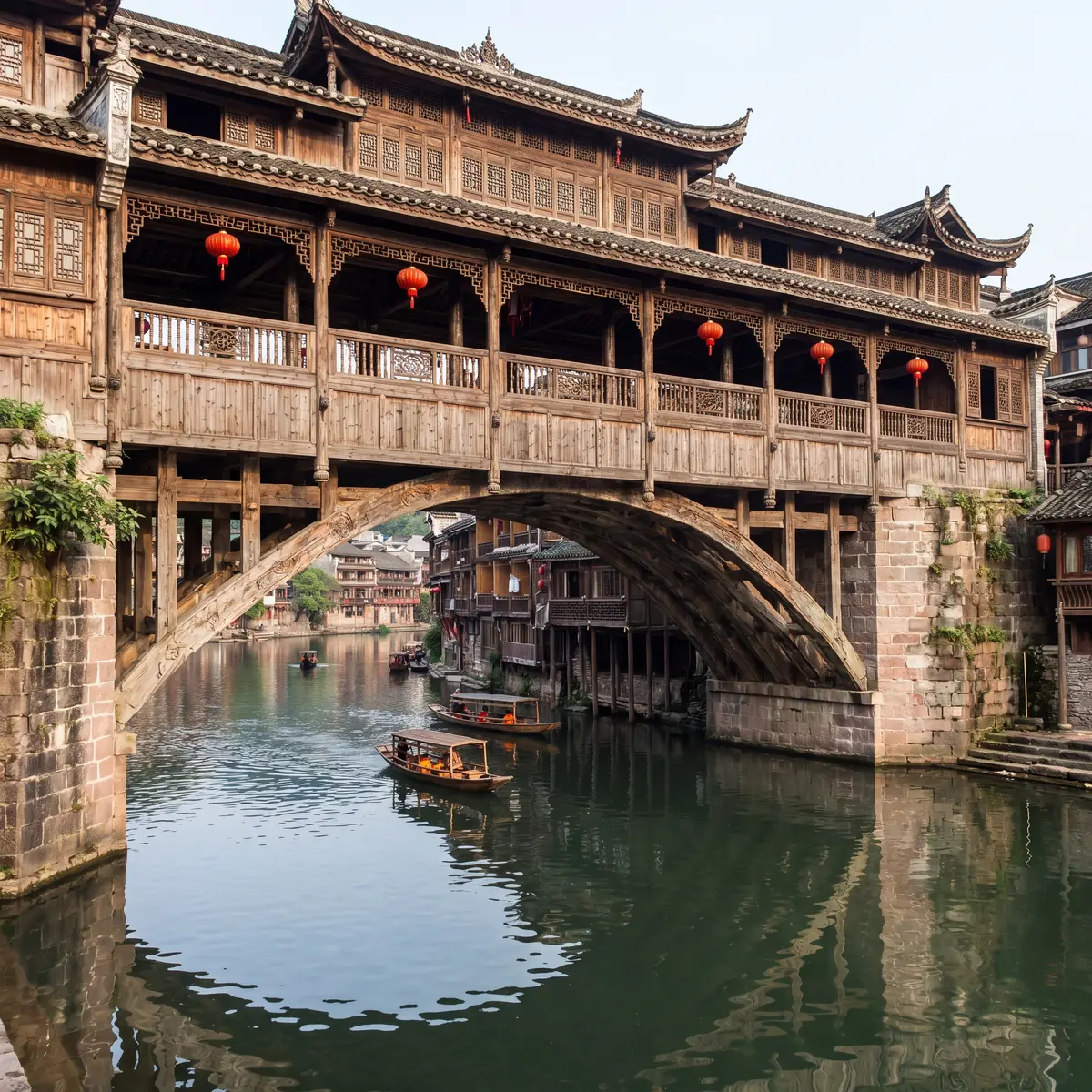
If Central and Eastern Hunan are the home of scholars and ideas, Western Hunan (Xiangxi) is the land of legends, dreams, and wildness. This is the home of the Miao and Tujia people, full of primitive and mysterious cultural vibes. From the stilt houses hanging over the Tuo River in Fenghuang to the waterfalls of Furong Town, every inch of Xiangxi feels like a story. The culture here is colorful—the silver jewelry of Miao girls shimmering in the sun, the intricate patterns of Tujia weaving, and the high-pitched folk songs echoing through the valleys. This is the 'Border Town' that writers described as a dream where time stood still. Walk into a village and you’ll find time flows differently; people still hold a deep reverence for nature and tradition. This mix of cultures makes Hunan’s background incredibly rich. Here, you can forget the modern world and listen to the mountain’s heartbeat. The charm of Xiangxi is its imperfection and its truth. It’s a scent of woodsmoke and sweet glutinous rice wine. Sitting on a doorstep watching the mist, you’ll find your soul at peace.
Keep Planning From Here
A few next reads that fit this page and help you shape the trip more clearly.
Shaoshan: Red Heart
Visit Shaoshan, the birthplace of Mao Zedong. A place of profound historical and political significance to the Chinese people.
Read next DestinationsYueyang: City of Poetry
Visit Yueyang to see the thousand-year-old Yueyang Tower and the vast Dongting Lake. A must-visit for history and poetry lovers.
Read nextPlan With A Local
Need help turning all this research into a real itinerary?
Tell me your dates, budget, pace, or must-see places. I can help you narrow routes, avoid weak choices, and build a more confident plan.
For privacy, contact details stay behind the buttons and are never shown as public text on the site.
Practical Information
- Cultural AnchorsYuelu Academy (Changsha) and the Provincial Museum are the two "must-hits" for history.
- History TipBefore visiting Shaoshan, read a bit about modern Chinese history; it makes the experience much deeper.
- Fun FactThe percentage of modern Chinese leaders and generals from Hunan is incredibly high—it’s a province of pioneers.
- Contact Me
Need help with this part of the trip? Use the private WhatsApp or Email buttons on this page for a personal reply.
Need local help with this page?
Ask for route advice, timing suggestions, or a quick sanity check before you book.
For privacy, contact details stay behind the buttons and are never shown as public text on the site.