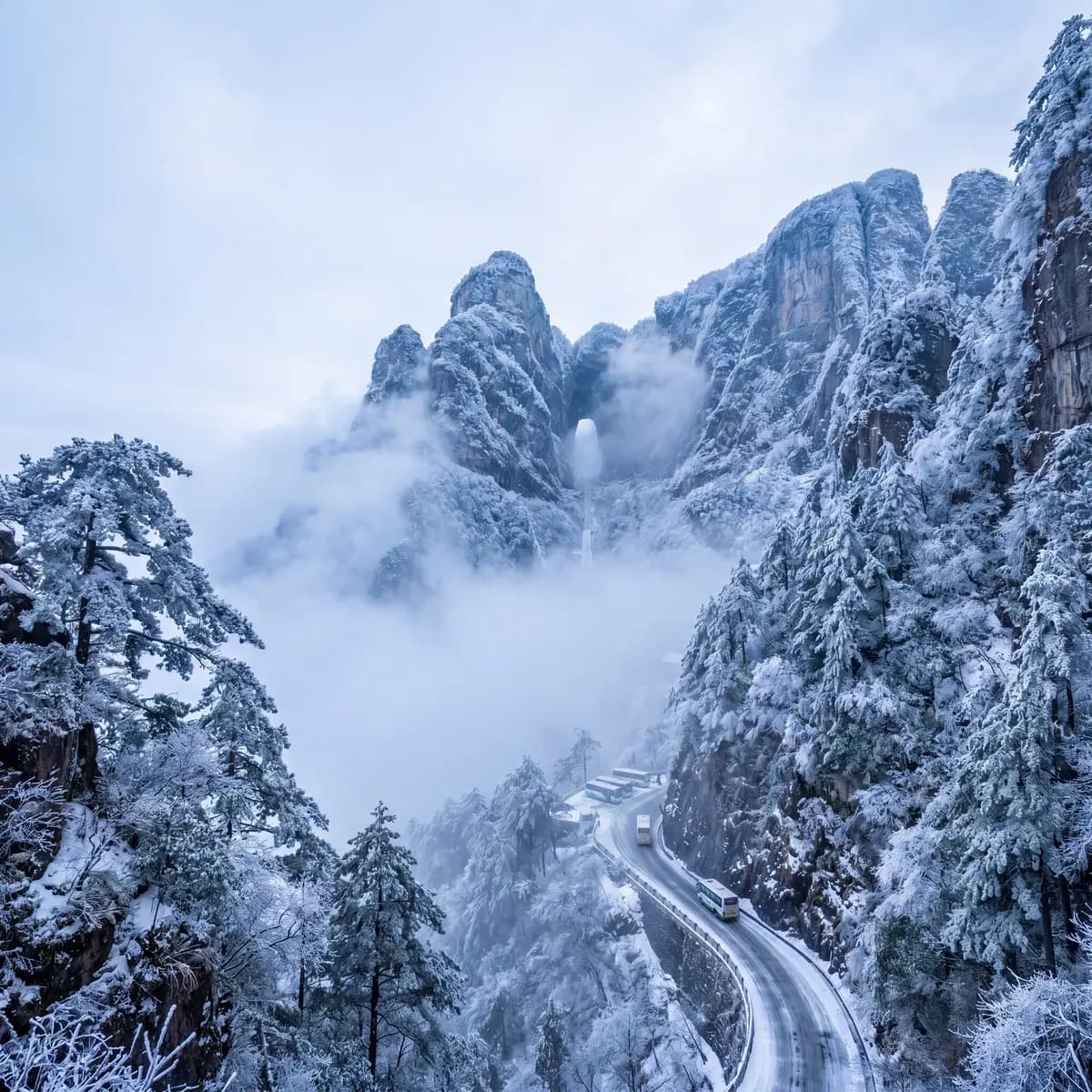
January in Hunan: Silent Peaks & the Scent of Smoked Cured Meat
January is the coldest month in Hunan. Experience the soundless beauty of snow in Zhangjiajie and the thousand-year tradition of smoking 'La Rou' in ancient villages. As a local girl, I'll take you into the warmest, most authentic side of our winter.
Contact Me
Want a clearer trip plan from a real local perspective?
Reach out when you want local, honest, and practical help choosing cities, fixing pacing, checking transport, or avoiding common first-time mistakes.
For privacy, contact details stay behind the buttons and are never shown as public text on the site.
The Beauty of Silent Peaks: A Frozen 'Avatar' World
Listen to me: if you want to see a completely different Zhangjiajie, January is the time. The mountains shed their tourist chaos and reveal a deep, majestic silence. When the first snow hits those sandstone pillars, the whole world looks like it's been dusted with thick powdered sugar. Ancient pines are covered in crystal-clear rime, sparkling like gems under the winter sun. As a local girl, my favorite thing is heading to Yuanjiajie on a January morning. There are so few tourists that you can hear the wind whistling through the needles and the soft 'thud' of snow falling from branches. It’s a black-and-white world, like a traditional ink painting, and it feels like a secret between you and the peaks. If you're lucky enough to catch a heavy snow, it looks more sci-fi than the movie. But I have to warn you—this beauty comes with a price. On the mountain tops in January, the wind is fierce and temperatures are well below freezing. You need your thickest windproof down jacket and, most importantly, those 10-RMB ice-crampons for your boots. Without them, the frozen stone steps are a death trap. This 'hardcore' outdoor experience rewards you with absolute visual shock. If you're cold-sensitive, book a guesthouse in Wulingyuan with floor heating, brew a pot of hot tea, and just watch the mountains from your window. It’s pure 'Yunwei' (rhythmic charm).
The Season of La Rou: Finding the Soul of Winter
If you walk through the old alleys of Changsha or the villages of Xiangxi in January, your nose will tell you before your eyes: winter is here. That’s because every balcony, porch, and window frame is hung with bright red slabs of 'La Rou' (cured meat), fish, and sausages. We call this the 'prologue' to the Lunar New Year. This smoky scent, mixed with the aroma of wood ash, is the smell of nostalgia for us. We smoke the meat slowly over pine branches, tea husks, or orange peels, letting the spirit of the fire seep into every fiber. When you step into a 'Fly Restaurant' in the January chill and order 'Stir-fried La Rou with Garlic Sprouts,' and see that fat turn into transparent amber in the sizzling wok, all the cold vanishes. Local secret: If a local friend invites you home and serves their family's own smoked meat, you're officially part of the family. The darker the meat and the heavier the smoke, the more authentic it is. This is a taste you can't buy in a supermarket; it’s a masterpiece of time, salt, and fire. January air in Hunan smells salty and smoky—it’s not just food; it’s a reward for a year of hard work and the promise of the coming festival.
Winter 'Heat Patches': Hot Pots, Dry Pots & Lei Cha
Many people ask how we survive January without central heating. My answer: we eat spice. In the January cold, nothing is more healing than sitting around a bubbling, red-oil hot pot. we believe the intense spice pushes the 'damp cold' out of your body, making you burn from the inside out. In Changsha, you'll see restaurant windows covered in thick white steam, hiding crowds of people holding ice-cold milk tea while eating boiling beef and lamb. This 'fire and ice' contrast is our winter romance. In Xiangxi, we prefer 'Lei Cha' (Pounded Tea). We pound ginger, tea leaves, peanuts, and sesame in a ceramic bowl and pour in boiling water. One bowl of this thick, spicy, nutty tea, paired with crispy fried glutinous rice cakes (You Baba), will bring you back to life instantly. I remember one year during a cold snap, I hid in a small shop in Furong Town, drinking hot Lei Cha and watching the sleet outside. I felt all the warmth in the world was in that bowl. So, don't look for the heater in January; head to the hot pot shop. It’s our most efficient 'physical warming.'
The Chaos of the New Year Market: Raw Human Energy
As January enters its last week, the city is rapidly conquered by the color red. The Gaoqiao Market in Changsha becomes the busiest place in the province. Thousands of people swarm there to buy boxes of nuts, candies, red lanterns, and couplets. Even if you aren't buying anything, the 'Re-Huo' (fiery/lively) energy of the New Year market is a sight to behold. You'll see grandmothers haggling over a few cents and kids staring at colorful lanterns. This raw, street-level vitality is the cultural root hidden behind the skyscrapers. For travelers, this is the best window into Chinese family values and traditions. Local tip: If you're in Changsha, wander through the small community markets. You'll find that while people say the 'New Year vibe' is fading, it’s still steaming with hope here. Everyone has a busy but satisfied face because they're preparing for the most important meal of the year—the reunion dinner. This atmosphere is contagious; it makes you feel that even in the cold of January, life is full of promise.
Keep Planning From Here
A few next reads that fit this page and help you shape the trip more clearly.
Plan With A Local
Need help turning all this research into a real itinerary?
Tell me your dates, budget, pace, or must-see places. I can help you narrow routes, avoid weak choices, and build a more confident plan.
For privacy, contact details stay behind the buttons and are never shown as public text on the site.
Practical Information
- WeatherCold and damp. Average 4°C - 8°C. Real feel is very low. Mountains often have snow and rime.
- PackingThermal base layers, windproof down jacket, waterproof boots, and plenty of heat patches (Nuan Bao Bao).
- Local TipAlways ask if your hotel has "floor heating" (Di Nuan). AC heating is very weak in the wet January cold.
- Contact Me
Need help with this part of the trip? Use the private WhatsApp or Email buttons on this page for a personal reply.
Need local help with this page?
Ask for route advice, timing suggestions, or a quick sanity check before you book.
For privacy, contact details stay behind the buttons and are never shown as public text on the site.