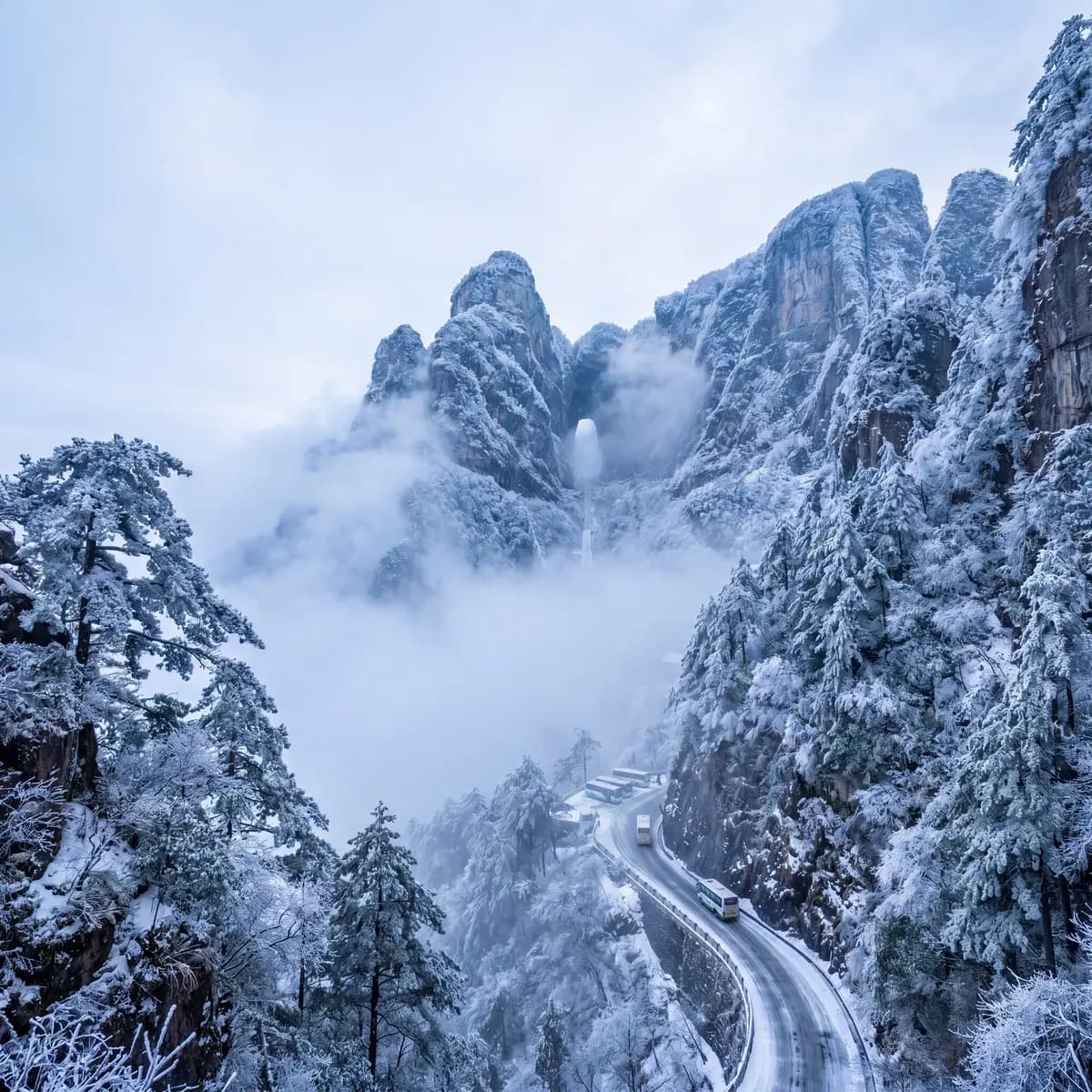
Winter in Hunan (Dec - Feb): Silence, Snow Shadows & Smoked Aromas
Hunan's winter is for soul-searchers and spicy food lovers. Experience the black-and-white beauty of Zhangjiajie after snow and feel our thousand-year-old cured meat culture.
Contact Me
Want a clearer trip plan from a real local perspective?
Reach out when you want local, honest, and practical help choosing cities, fixing pacing, checking transport, or avoiding common first-time mistakes.
For privacy, contact details stay behind the buttons and are never shown as public text on the site.
The Frozen 'Avatar': A Private Secret World
When it finally snows in Zhangjiajie, the whole world falls into a deep silence. Those vertical sandstone pillars look like they've been dusted with thick powdered sugar, and ancient pines are covered in 'ice-rime' (Wusong), looking like giant crystal sculptures from another world. Most people avoid winter because it’s cold and damp, but in my view, that’s their loss. You can stand on the platforms of Yuanjiajie or the 'First Bridge' with absolutely no one else around. That slightly melancholic, black-and-white world is a secret between you and the mountains. If you're lucky enough to catch a heavy snow, the mountains look more sci-fi and alien than in the movie. Just remember to put ice-crampons on your boots—the frozen stone steps are incredibly slippery. This 'hardcore' beauty requires some grit, but it rewards you with absolute peace. I remember a December morning when the only sound was my own footsteps in the snow. If you want to escape the noise, winter in Zhangjiajie is your sanctuary. That resilience standing in the ice will give you a new understanding of life.
Fighting the 'Wet Cold': Local Survival Wisdom
Listen to me: the winter in Southern China feels much colder than the weather report says. Because we don't have central heating, that 'wet cold' crawls into your bones. But we locals have a very effective 'survival strategy.' We wear 'Mian Mao Ku' (thermal leggings)—we call it 'the second skin,' and we don't take it off until March. We sit at special heating tables with blankets (Huo Gui). But the most delicious way to stay warm is from the inside out. We eat spicy, steaming hot pots with lots of ginger, garlic, and pepper. It makes your forehead sweat and your blood boil. If you see a group of locals crowded into a tiny restaurant with steamed-up windows, join them. That’s real winter warmth and community. It’s a collective ritual against the cold. I love that feeling of the hot pot steam blurring the windows; it’s the most secure moment in winter. One bite of hot beef and the cold wind outside doesn't matter anymore. That’s the Hunanese spirit: however cold it is outside, the heart and stomach must stay hot.
The Scent of Winter: The Spirit of Cured Meat
If you walk into any traditional Hunan village in December or January, you’ll smell the scent of our ancestors' memory: woodsmoke and salty pork. This is the season for making 'La Rou' (cured meat). You’ll see massive slabs of pork, whole fish, and ducks hanging on balconies or in special smoking rooms, slowly curing over pine branches and tea husks. This isn't just food; it’s our cultural heritage and a symbol of hard work. This meat is saved for the grand Lunar New Year reunion dinner. That smoky, complex, rich flavor is the ultimate comfort. Whether it's stir-fried with garlic sprouts or simply steamed on top of rice, the translucent fat and bright red meat of La Rou is the taste of home. It connects our past and present. I remember watching my dad smoke meat when I was little; that scent stays with you forever. Cured meat isn't just salty; it’s the taste of time and the effort put in to have a good year. If you come to Hunan and don't taste authentic La Rou, you've missed the soul. Take a piece home; it’s a magical medium that brings you back to Hunan instantly.
Silent Ancient Towns: Time Standing Still in the Mist
Ancient towns like Fenghuang and Furong Town reveal their most honest faces in winter. The morning mist on the Tuo River is often so thick you can't see the other bank, making the stilt houses look like they're floating in a sea of clouds. The noisy tour groups are gone, and the pace of life slows to a crawl. You’ll see old men fishing patiently in the mist and women washing vegetables in the cold river, just as they have for centuries. It’s a great time to find a boutique riverside guesthouse, grab a hand-warmer, and just read, drink tea, and look at the view. It’s more like a spiritual retreat. The ancient town feels older and more storied in winter—it’s no longer a tourist site, but a real home. I love walking on the stone paths at night in winter, hearing my own footsteps and feeling every stone tell a story. This cold silence is a high-level aesthetic. If you’re looking for true peace, the winter towns have the answer.
The Lunar New Year Return: The Most Emotional Time
Late January and February are dominated by the theme of the Spring Festival. This is 'Chunyun'—the world's largest human migration, as millions of Hunanese return home from big cities. It’s a massive tide of emotion. Cities like Changsha become strangely quiet, while the countryside becomes incredibly lively. If you're here during this time, you'll experience the most traditional and authentic side of China. Red lanterns are everywhere, firecrackers echo, and the air is full of the scent of New Year's dinner. Even if some shops close, the sense of community and celebration is contagious. This is the power of 'reunion.' Even as a traveler, you’ll feel that deep hospitality and festive warmth. It’s the climax of winter, where the cold is forgotten in the heat of celebration. I remember the fireworks lighting up the night sky; that hope for the future and love for family is the warmest light in winter. Go feel this atmosphere; it’ll make you rethink what 'home' means.
Keep Planning From Here
A few next reads that fit this page and help you shape the trip more clearly.
Hunan in December
December is silent. Find a soul sanctuary in the snow-covered Zhangjiajie and feel the heat of the hot pot. As a local girl, I'll take you into this coldest but most heartfelt month.
Read next MonthsHunan in January
January is the coldest month in Hunan. Experience the soundless beauty of snow in Zhangjiajie and the thousand-year tradition of smoking 'La Rou' in ancient villages. As a local girl, I'll take you into the warmest, most authentic side of our winter.
Read next MonthsHunan in February
February is the heart of the Spring Festival. Feel the fiery character of Hunanese people in the sound of firecrackers and find the most authentic Chinese New Year vibe under red lanterns. As a local girl, I want you to experience the craziest and warmest month of the year.
Read nextPlan With A Local
Need help turning all this research into a real itinerary?
Tell me your dates, budget, pace, or must-see places. I can help you narrow routes, avoid weak choices, and build a more confident plan.
For privacy, contact details stay behind the buttons and are never shown as public text on the site.
Practical Information
- WeatherCold and damp. 0°C - 10°C. Occasional snow in the mountains (Jan/Feb).
- Local Hero"Nuan Bao Bao" (heat patches)—stick them on your lower back and feet to survive two more hours outside.
- Food LogicAlways order a "Guo Zi" (hot pot) and double the spice level to fight the external wet cold with internal fire.
- Contact Me
Need help with this part of the trip? Use the private WhatsApp or Email buttons on this page for a personal reply.
Need local help with this page?
Ask for route advice, timing suggestions, or a quick sanity check before you book.
For privacy, contact details stay behind the buttons and are never shown as public text on the site.