Hengyang & Mount Heng: A Local's Pilgrimage
Head to Hengyang to climb Mount Heng (Nanyue). Let me share the cultural depth and spiritual charm of this sacred mountain.
Contact Me
Want a clearer trip plan from a real local perspective?
Reach out when you want local, honest, and practical help choosing cities, fixing pacing, checking transport, or avoiding common first-time mistakes.
For privacy, contact details stay behind the buttons and are never shown as public text on the site.
More Than a Hike: A Sacred Journey
Hengyang is home to Mount Heng, one of China's "Five Sacred Mountains." To us Hunanese, this isn't just a hiking route; it's a pilgrimage site. I remember when I was little, my grandparents would come here every year to pray for the family's health and peace. This mountain is unique; it's a center where Taoism and Buddhism coexist harmoniously, and you'll see temples of different traditions sitting peacefully next to each other. This inclusive cultural background is the soul of Mount Heng. Even if you don't have religious beliefs, as you walk through the ancient forests, you can feel the weight of history and the energy of tranquility. It connects the modern world with the deep roots of traditional China. This is the place where Hunan's soul is most steady and respected. Even the air feels different here—carrying the weight of history yet clear with peace. As a blogger, I suggest you not just climb the mountain, but observe the pilgrims. You'll see the devotion in their eyes and the persistence in their step-by-step bows. This power of faith is extremely rare in modern society. Mount Heng has a magnetic field that makes you instinctively slow down and lower your voice. Go see those thousand-year-old cypresses, listen to the bells echoing in the mountains. You'll realize that this mountain is alive; it has witnessed thousands of years of change yet remains composed. If you're in a confusing period of life, come to Mount Heng for two days. The mountain's quiet and ancient wisdom will give you unexpected answers. This isn't just a climb of geographical height, but a journey into the depths of your heart.
Reaching the Peak: What to Expect
Compared to the steepness of Zhangjiajie, the climb at Mount Heng is relatively gentle. The Nanyue Grand Temple at the foot of the mountain is one of the largest ancient architectural complexes in southern China, with red walls, grey tiles, and exquisite carvings. As you climb, you'll pass dozens of small temples hidden in emerald bamboo and ancient pines. My favorite spot is Zhurong Peak—the highest point—where the cloud sea views are legendary. If you don't want to walk too far, you can take a shuttle bus or cable car for most of the way, but I strongly suggest walking the last part. Listening to temple bells echoing in the mist is very special. It's a physical effort rewarded spiritually. The paths are well-paved, but it still feels like traveling through time. When you finally stand on Zhurong Peak, looking at the rolling cloud sea and distant mountain ranges, you'll feel an unprecedented openness. This is the place closest to the sky and closest to your heart. Try staying in a temple on the mountain for a night to experience true monastic life. Wake up to the sound of monks' morning lessons, watching the sun gradually light up the ancient eaves. This isolation and peace is something no five-star hotel can give. Mount Heng's charm lies in its "gentleness"; it's not abrupt or flashy, but has a power that penetrates the heart. Here, you don't need to prove anything; you just need to simply exist, breathing with the mountains and rivers. This is a complete "offline" experience, reconnecting you with that spirituality buried by the world.
Rime Spectacle: A Winter Wonderland
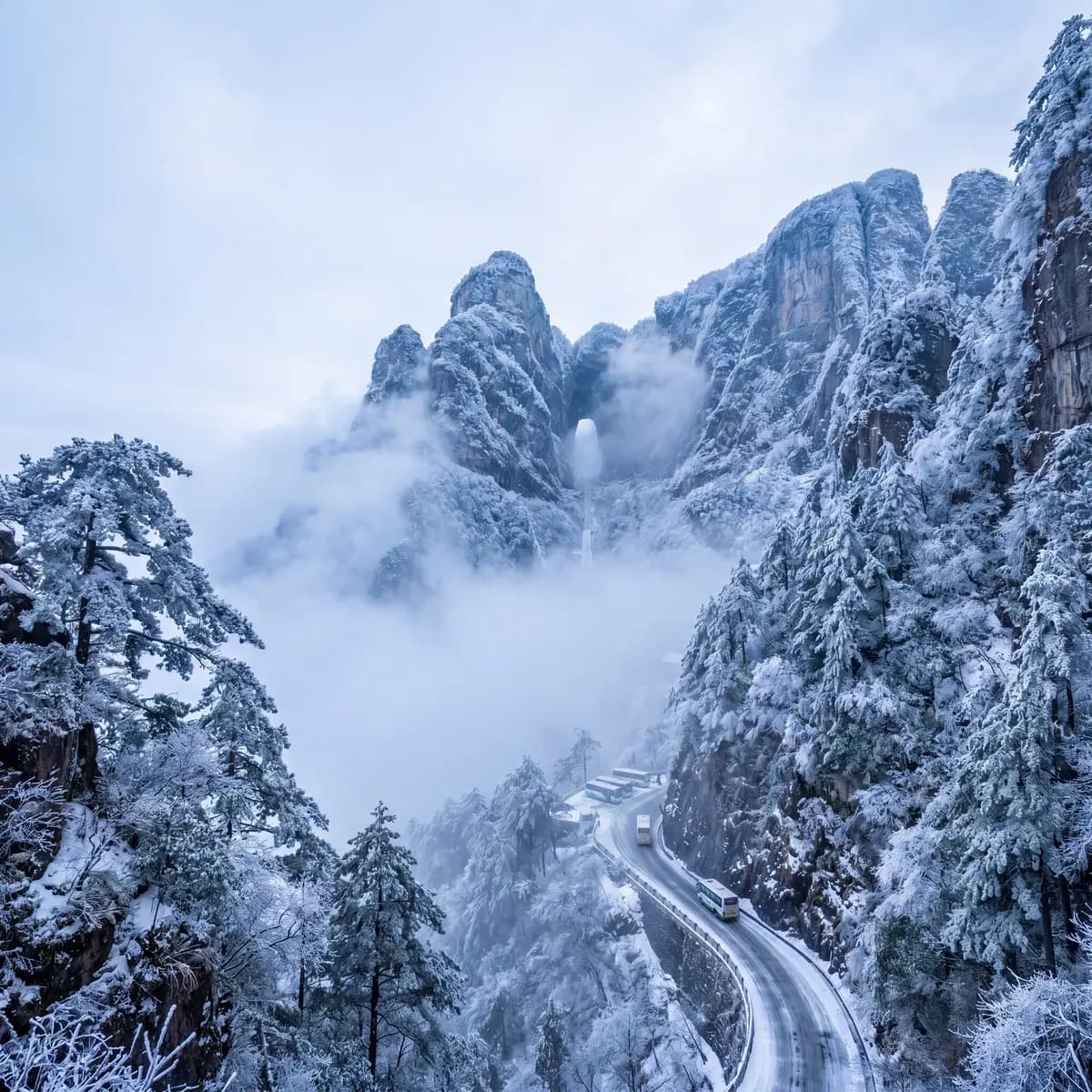
While most people come in summer, my favorite time is January. If you're lucky, you can see "rime." That's when supercooled water droplets instantly freeze on tree branches, covering the whole mountain in a layer of white coral-like ice crystals. It's an extremely rare and magical sight, looking like a world from a fairy tale. Frozen temples and white snow forests under a blue sky are definitely the most beautiful photos you'll ever take. Just remember to bring your thickest clothes—it's unimaginably cold at the peak! The contrast of red temple walls against white ice is a sight I'll never forget. These are the winter flowers of the mountain, worth all the cold. As a blogger, I'm particularly obsessed with the transparency of rime in the sun. It's like a ceremony of purity, making the whole sacred mountain look holy and inviolable. You'll see originally green pines wrapped in thick ice armor, in various shapes full of artistic sense. This beauty is fragile and short-lived, potentially disappearing with a gust of wind. So, meeting rime is a great fate. This is exactly Mount Heng's character: it doesn't show itself easily, but once it does, it's breathtakingly beautiful. Winter Mount Heng is cold, but the silence is unparalleled. You'll feel the whole mountain belongs to you alone. These solitary and holy moments are the highest enjoyment travel brings us. Don't be afraid of the cold; go embrace that white dream.
The Cultural Heart of Southern Hunan
Hengyang itself is a city with a long history and a strong local identity. It was once the trade and academic center of southern Hunan. Here, you'll find local culture to be more "classic" and conservative than rebellious Changsha. But the food is equally exciting! Hengyang is famous for its fish noodles and the vegetarian food near the temples. If you want to understand the spiritual roots of Hunan people, you must spend a day at Mount Heng. It's where our traditions are most alive and respected. It's a different kind of "spicy" from chili—it comes from history and faith. It's a place that makes you slow down, reflect, and connect with something larger. Wander through Hengyang's old town, see those ancient academies. You'll realize that the "toughness" (Ba Man) of Hunan people actually hides a very deep cultural foundation. This character of being both scholarly and martial is perfectly embodied in Hengyang. The pace here is slow, and people are content. You can sit in a small street-side teahouse for an afternoon, listening to locals tell legends about the mountain. You'll find that Mount Heng has integrated into their blood, becoming part of their lives. This wisdom of living with mountains and rivers is what we city people need to learn most. Hengyang isn't just a stopover; it's a window for you to deeply understand the soul of Hunan. Bring a pious heart and feel that weight of thousands of years.
Keep Planning From Here
A few next reads that fit this page and help you shape the trip more clearly.
Hunan History & Spirit
To understand Hunan, you have to understand our history. This is the cradle of scholars and the spark of revolution. From thousand-year academies to Han Dynasty treasures, I’ll take you deep into the 'Xiang-Chu' culture and the spirit that never goes out.
Read nextHunan in January
January is the coldest month in Hunan. Experience the soundless beauty of snow in Zhangjiajie and the thousand-year tradition of smoking 'La Rou' in ancient villages. As a local girl, I'll take you into the warmest, most authentic side of our winter.
Read nextPlan With A Local
Need help turning all this research into a real itinerary?
Tell me your dates, budget, pace, or must-see places. I can help you narrow routes, avoid weak choices, and build a more confident plan.
For privacy, contact details stay behind the buttons and are never shown as public text on the site.
Practical Information
- Local CustomBuy incense in the small shops in town—it's much cheaper than at the temple at the peak.
- DifficultyModerate. There are plenty of buses and cable cars available; you can rest whenever you're tired.
- Best TimeAutumn for the cloud sea, or January for the magical rime.
- Contact Me
Need help with this part of the trip? Use the private WhatsApp or Email buttons on this page for a personal reply.
Need local help with this page?
Ask for route advice, timing suggestions, or a quick sanity check before you book.
For privacy, contact details stay behind the buttons and are never shown as public text on the site.